Aragonese Castle of Ischia: the complete guide
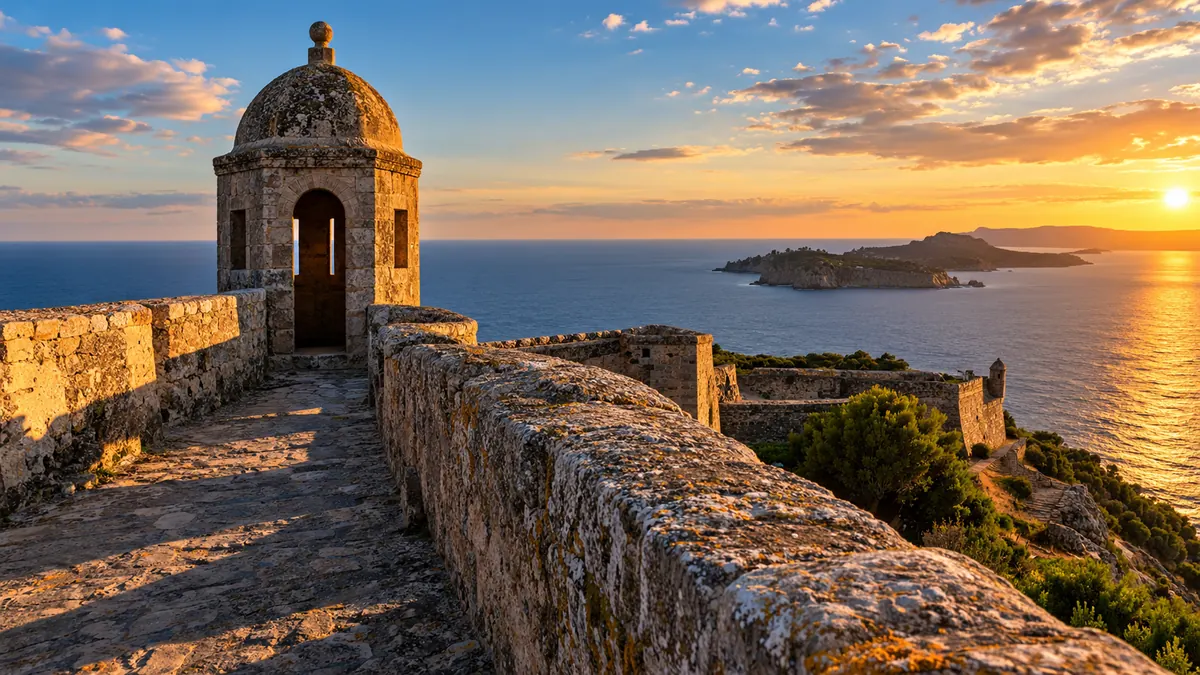
I was born in Ischia Ponte, three hundred metres from the bridge, and I’ve been bringing visitors to the castle for fourteen years. I can tell from their pace who’s budgeted twenty minutes: they arrive with their phone in hand, take a photo from the first terrace, and head back down. If I had to say just one thing before the bridge, it’s how long this visit really takes.
Planning your visit?The most popular tours sell out a few days in advance, and cancellation is free up to 24 hours before. Book now and decide later.
Check availabilityAn hour and a half, not twenty minutes
The route is almost two kilometres long, includes lots of steps, and is almost entirely outdoors. The suggested time is about an hour and a half, and from the outside, you can’t see why. From the bridge, you see a rock with a tower on top, and it looks like one thing. But inside, there’s a Poor Clares convent, an unfinished church, a Bourbon prison, a roofless cathedral, a garden with a 300-degree view, two cafés, and a bookshop. You can take the lift or walk up, but at the top, you’ll still need your legs—the steps are there, and no lift can skip them. The twenty-five stops are on what to see inside; if you have a ferry to catch, I’ll explain how long the visit takes what you can skip.
What your €15 ticket really gets you
It gets you everything I just listed, no booking, no time slots—you pay at the ticket office and walk in. Kids under 9 go free, ages 10–18 pay €6, over 70s and groups of 20+ pay €12, island residents pay €6. There’s also a named pass for ten entries at €25. Pets are allowed. At the entrance, they’ll hand you an info leaflet. The two panoramic cafés, Il Terrazzo and Caffetteria del Monastero, have their own hours, which don’t always match the castle’s. But the number that matters more than the price is this: the last ticket is issued an hour and a half before closing, and closing time follows sunset, so it changes month to month. On Wednesday, 23 September 2026, it closed at 19:30, and by 18:00 the ticket office had already stopped. The people I turn away, I turn away for this reason—not the price. Full rates and rules are on tickets and prices, opening times on opening times.
Nuns' Cemetery
Below the Church of the Immaculate Conception are low, vaulted rooms where light never reaches. The convent of Santa Maria della Consolazione, founded in 1575, housed forty Poor Clares, almost all firstborn daughters of noble families sent into seclusion so the inheritance would pass to a son. When one of them died, her body was placed on a high-backed stone seat—the *scolatoio* (a drainage seat)—and left to decompose, the fluids collected in jars, the dry bones later stored in the ossuary. It was meant to show how little the body mattered as a vessel for the spirit. The nuns came down here every day to pray and meditate on death, in air that never circulated—the only vents were narrow square shafts called *ventarole* (air vents), and many fell seriously ill, some died. The first time I went down there, I was sixteen, and no one had warned me. It’s the stop everyone asks me about on the bridge on the way back—I tell the full story on the Nuns' Cemetery. If you’re travelling with sensitive kids, be aware beforehand.
A private castle since 1911
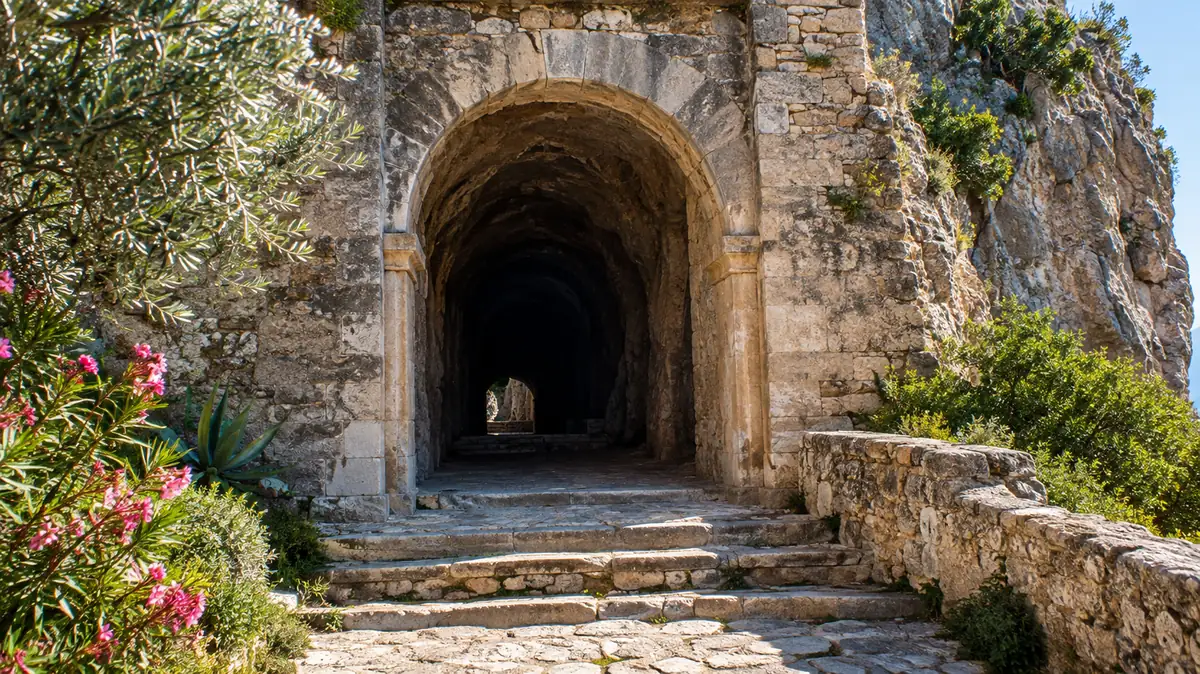
This rock isn’t owned by the town or the state. On 8 June 1911, lawyer Nicola Ernesto Mattera bought the ruined fortress from the state for 25,000 lire—the equivalent of a hundred civil servants’ salaries—and in 1913, he also bought the surrounding land, moved in, and started restoring it. In 1967, the state declared it a national monument and banned further construction. Between 1965 and 2003, Gabriele Mattera and his wife Karin, along with Antonio Mattera, restored it with a deliberately light touch, leaving the patina on the stones—that’s why the castle doesn’t look redone. Today, it’s run by the third generation of the family. As a visitor, you notice it in two ways: it stays open every day except for maintenance from 7 January to early March, and the Cathedral of the Assumption is still roofless because after the English bombing in 1809, the rubble was never cleared. The rest of the story is on who owns the castle and on the castle’s history.
When a tour is worth the money—and when it’s not
Never for entry: you buy the ticket at the gate, and you can explore the castle perfectly well on your own. A tour solves two things. The first is the history: 2,500 years, from Hiero of Syracuse to Vittoria Colonna to the political prison, can’t fit on a panel, and the €40 guided tour from Ischia Ponte covers it all, with a shuttle from your hotel and the Borgo di Celsa afterwards. Keep in mind it’s a small operator, with 4.6 out of 33 reviews, and some people have had issues with the meeting point—make sure they confirm it for you. The castle also offers its own guided tours at set times, bookable by phone. The second issue is getting here: if you’re staying in Naples, the €72 tour is the only one that brings you here and back in a day, and its 4.0 out of 254 reviews tells you what it is—a long day with two ferries included. I recommend it for the logistics, not the finesse. Boat tours are different: they show the castle from the sea but don’t go inside, whether it’s the €71 tour from Forio, the €80 family option, or the €25 motorboat with a stop in Sant’Angelo. These are sea days—the comparison with the numbers is on all Ischia tours, and if you’re still wondering whether to go up, the honest answer is on it’s worth it.
Ready to go up?
For the castle alone, just show up at the entrance with €15. If you want the history told well, or if you’re coming from Naples and don’t want to juggle ferries and buses, guided tours make sense. Below, you’ll find the available dates; the full comparison is on castle tour and in the reviews.
Frequently asked questions
How much does it cost to enter Aragonese Castle?
A full-price ticket costs €15. Kids up to 9 years old get in free, ages 10 to 18 pay €6, and visitors over 70 pay €12. The full price list is on tickets and prices.
How long does it take to visit the castle?
About an hour and a half, since the route is almost two kilometers long and quite steep. If you budget just twenty minutes, you’ll only see the first terrace. I cover this in detail on how long the visit takes.
Do I need to book or buy tickets online?
No. The castle is privately owned and doesn’t sell individual tickets online—you pay at the entrance. You can book guided tours, though, which are a different thing—I compare them on castle tour.